DigiTopia
Welcome to Digitopia, your ultimate destination for the best digital marketing content. At Digitopia, we understand the ever-evolving landscape of digital marketing and the importance of staying ahead in this dynamic field. Our mission is to empower businesses, marketers, and enthusiasts with top-notch content that not only informs but also inspires action.
How Is the 5G Technology Changing Digital Marketing?
Rolling out of the 5G technology is one of the most significant developments in telecommunications that shall bring a change in business-to-consumer interactions. This technology promises ultra-fast data speeds, near-zero latency, and the ability of simultaneous connection for multiple devices combination that is sure to bring change in digital marketing. In this regard, changing the way digital marketing strategies are executed with 5G technology will be more innovative, engaging, and efficient.
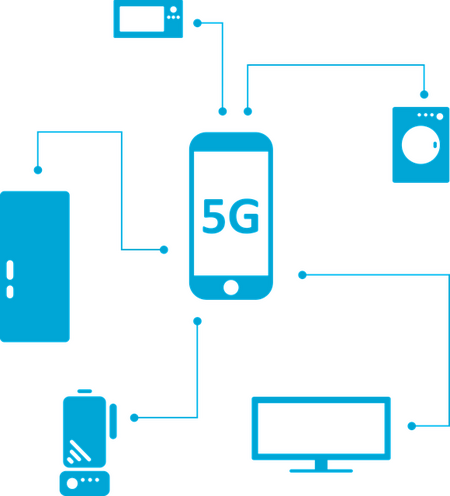
By adopting this state-of-the-art technology, businesses will now be able to reach their target audiences in ways they never could have imagined earlier. Some interesting questions that emerge from this article are how 5G is revolutionizing the landscape of digital marketing and its impact on every facet of the fast-paced industry.1. Content delivery would be faster and more effective.Making content available much faster is one of the greatest impacts 5G has on digital marketing. With this, due to high-speed internet provided for users to have a seamless online experience, marketers would be able to provide much higher-quality content without needing lengthy loading and buffering time. Whether in the form of video marketing, AR, or VR, the presentation will be directly accessible and also at a much higher resolution.For example, video content, which today comes out as the most conspicuous form of digital marketing, will be even more important. Due to 5G, marketers can develop and share high-definition videos with little lag. Others may be able to develop new forms of content, such as 360-degree videos and real-time streaming events. Businesses will now have to rethink their video marketing strategies as they learn how best to take full advantage of the faster and more responsive environment.Moreover, faster content download means a better user experience, which increases engagement rates. In this case, when users are made to continue consuming content without interruptions, they will spend more time on websites, engage with advertisements, and convert into paying customers.2. Better Experience for MobilesFifth-generation technology will redefine the experience itself as 5G matures. Most people access the Internet on mobile devices; 5G makes browsing on mobile that much more fluid and seamless than with previous versions. This will ensure digital marketers emphasize mobile experiences even further, where for example, websites and apps must load seamlessly without any glitches, and ads pop up right away.In a 5G world, the digital marketing approach needs to adjust to focus on mobile-friendly design. Web pages must start loading in seconds, video playback shouldn't get interrupted by pauses, and augmented shopping should flow as a fluid shopping experience.Mobile optimization has always been important for digital marketers but 5G significantly raises the bar.Consumers won't only demand pages to load in just seconds but will demand more richness and interaction. Augmented reality apps, for example, will thrive in the 5G era. Retailers can use AR to let customers try products virtually or view them in 3D, thus creating an improved shopping experience that can drive more conversions.3. Advanced Data Collection and AnalysisThere is now a new game in digital marketing collection and analysis of real-time data. Businesses will soon have much more accurate and fast insights into consumer behavior, benefiting from a wider scope of application of 5G. Beyond the increased number of interconnected devices, including the Internet of Things, marketers will be able to collect data from smart homes, wearable devices, and connected cars.Through the collection of real-time data, marketers may adjust campaigns instantly based on the actions made by users. Therefore, if a customer interacts with an ad but doesn't make a purchase, marketers may retarget such customers instantly with personalized offers or recommendations. Marketing will be much more efficient and tailor-made for individual needs.Significantly, the 5G technology will enable AI and machine learning integration into a marketing strategy. These tools will aid marketers in researching enormous data and understanding trends, relating to the potential future behavior of the consumer.Businesses will therefore have optimum choices in establishing data-driven decision-making and optimizing marketing strategies.4. AR and VR IntegrationFrom AR to VR, one of the most exciting developments in digital marketing thanks to 5G - the experience will be seamless to the ends of those AR and VR solutions with 5G, so businesses can create innovative, interactive marketing campaigns.For example, an e-commerce site of apparel can utilize AR to enable its customers to "try on" clothes before buying them. For that matter, real estate companies can provide virtual tours of houses, and such activities enable potential buyers to explore houses from within the comfort of their couches.Such interactive experiences not only enhance the engagement of a website or e-commerce site but also increase the possibility of conversion as consumers feel confident with their purchases.5G technology can change the tact of digital marketing approaches, giving a chance to brands for competitive differentiation in the market. Soon, the use of AR and VR becomes standard in the retail, real estate, and entertainment industries.5. IoT - The Emergence of Smart DevicesNext to that is the massive adoption of 5G technology for the proliferation of IoT devices, which would help bring much more interconnection between homes, cars, and workplaces than ever. This superlarge network of devices now opens new ways through which digital marketers can engage with consumers.For example, smart refrigerators could propose grocery items based on the user's prior purchases, and wearable health/fitness devices can suggest fitness or health products or services. Content for companies will be even more relevant and timely because it is being delivered directly to consumers through their IoT devices.Apart from this, IoT data will provide marketers with more profound insights into customer behavior. Such insights will enable marketers to create effective marketing campaigns and improve efforts toward better customer targeting, thus creating personalized offers resonating with consumers.6. Challenges and Considerations for MarketersWhile 5G technology has lots to offer the digital marketer in terms of opportunities, challenges come along with it as well. The first and most striking one is data security since so many businesses will be accumulating more data via IoT gadgets and other devices from various sources. In this regard, a company needs to protect such data while ensuring that it maintains compliance with all the data protection regulations such as GDPR.Another factor is the need to invest even more by businesses in new technology and infrastructure to fully realize 5G. Upgrades will be necessary on websites, apps, and other digital platforms to deliver faster content and immersive experiences like AR and VR, for example. Companies that don't learn how to seize this will end up on the backbench.Finally, there will be a need for marketers to update themselves on the latest technological developments and consumer behavior if they are to remain competitive. Since the rate of change in the digital marketing world is quick, innovations need to be constant in organizations to stay in the game.ConclusionSuch an approach makes 5G technology the future of digital marketing, with options for fast content delivery, enhanced mobile experiences, real-time data collection, and immersion through AR and VR integrations. Embracing this new world of opportunities that 5G brings calls for corresponding responses from marketers to the challenge it poses. This means that businesses will be able to create more engaging, personalized, and efficient campaigns if they are ahead of the curve and integrate the 5G technology.With changing 5G technology, digital marketing adapts to the influence left behind. Professionals and businesses alike require upskilling. It is mainly the ones who aim to stay ahead of the curve need the best digital marketing course in Faridabad offering complete training on the new trends and technologies of marketing.FAQsHow will 5G impact mobile marketing?With 5G, the potential for mobile marketing will improve since it will provide faster speeds of download, greater responsiveness, and virtually seamless user experiences, thereby aiding marketers in crafting richer content and more interactive ads.What does 5G contribute towards data collection?5G will surely allow the real-time gathering of data from all devices, including IoT. With this, companies can make quicker, data-driven decisions on marketing.How to do AR and VR marketing with 5G?Businesses can now provide their customers using 5G with an immersive experience in AR and VR, such as virtual try-ons or 3D product views, to enhance
engagement and conversion rates.Challenges of IntegrationChallenges with the integration of 5G in digital marketing include the concern of privacy on data, infrastructure upgrades, and knowledge on technological development that helps to remain ahead.Why does 5G matter in content marketing?In content marketing, 5G is relevant as it allows users to enjoy higher-quality videos, fast-loading websites, and real-time interactive content.